
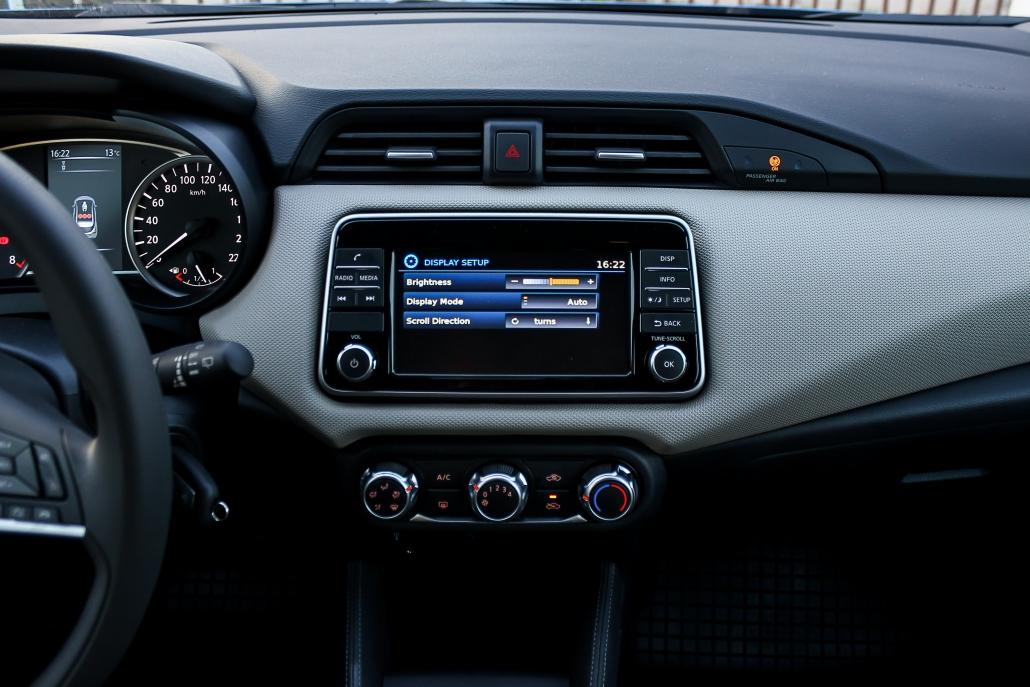
Buttons vs. Touchscreen
According to a survey, German drivers prefer to rely on classic buttons and switches rather than touchscreens and voice control when operating their cars. Thus, 37 percent of respondents in a representative survey conducted by the YouGov polling institute on behalf of the automotive traffic platform mobil.de stated that they preferred buttons, levers, and sliders. These were considered best, especially for opening and closing windows, and for climate and volume settings. While voice controls would be advantageous, they were also the most prone to errors.
More than 10 years ago, AUDIO MOBIL defined three operating environments. User areas of HMI in cars are divided into drivers, front passengers, and rear passengers. The study showed that automotive manufacturers cannot meaningfully design the driver’s user space without haptic controls.
In 2013, the company from Upper Austria introduced the iCS (innovative control system integrated into the steering wheel), which, despite having a built-in touch display, showed that test subjects preferred buttons and switches.
AUDIO MOBIL CEO Thomas Stottan is considered a pioneer in the use, application, and operation of multimedia systems in cars, not only because of these studies and operating concepts. For example, 50 patterns were also created in collaboration with the Christian Doppler Laboratory at the University of Salzburg, which can be used as a basis for developing an optimal interaction platform in vehicles.
Classic operating concepts such as buttons and rotary controls will therefore likely remain indispensable in vehicles in the future.








Leave a Reply
Want to join the discussion?Feel free to contribute!